Nowhere to Go: Inside the Texas Boarding Home System Where Abuse, Neglect, and Exploitation Are Widespread
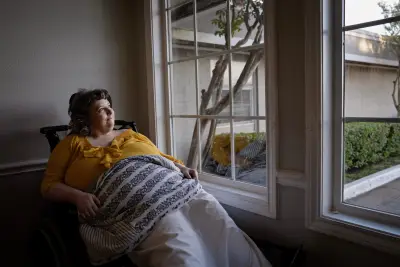
Editor s Note This article was produced and published by In These Times It is republished here with permission Angelique Estes knew her stay would be rough as soon as she arrived at her new home in Arlington Texas in early December At years old Estes had learned to read her ecosystem promptly She s lived with cerebral palsy all her life and her wellbeing fast deteriorated after her husband of nearly years died two years prior leaving her unable to walk With no family able to care for her and only disability benefits to rely on Estes like thousands of Texans in similar circumstances turned to group homes as a low-cost alternative to the nursing home she couldn t afford By the time she arrived at Woodbrook Street a squat three-bedroom brick house in a quiet suburban neighborhood she had already cycled through five such boarding homes none of which had been good As she took in the tight hallways so narrow that her ambulance gurney couldn t fit through she sensed this time was no better That s when I started to feel suspicious she recalls But she hadn t anticipated how much worse it could be Estes was taken to a room and placed on a bed Over the following meager days the adult undergarment she needed to wear was rarely changed and she was only fed instant noodles and mayonnaise sandwiches She was also given a new drug she hadn t been prescribed a liquid medicine that tasted like mint which she now believes was used to sedate her Her roommate an elderly woman was too frail to help With no Wi-Fi or information left on her phone she felt isolated and alone When I realized I wasn t going to be allowed to leave I slid onto the floor thinking they would have to call an ambulance to help me up she remembers They didn t Instead her care providers pulled her onto a mattress on the floor where she remained for the rest of her time in the home Trapped and desperate to escape she eventually tried to cut her wrists another attempt to compel someone to call an ambulance that could take her away But nobody called for help Conclusively five days after she arrived the message she d been trying to send to a friend I m being held against my will went through The friend called As it happened Woodbrook Street was already familiar to Arlington law enforcement Nearly three weeks prior on Nov police officers were dispatched to the house after another resident an elderly man with important physical disabilities had fallen in the backyard A neighbor discovered him lying on the ground and called According to police records officers interviewed the facility owner Regla Becquer who operated five unlicensed Dallas-area boarding homes for disabled and elderly people under the name Love and Caring for People LLC and the fire marshal conducted a house assessment but identified no violation Angelique Estes cycled through five boarding homes before arriving at Woodbrook Street in Arlington Texas an unlicensed facility where she says she was neglected and held against her will Danielle Villasana On Dec when police officers arrived in response to the call from Estes friend they exposed Estes on the mattress on the floor of her room When first responders appealed if she required to go to the hospital Estes yelled Yes Get me out of here Police opened an inspection into the house on Woodbrook Street and Becquer s other properties Across all five homes investigators ascertained that residents with major disabilities had experienced severe neglect deprived of food water and clinical care left in soiled adult undergarments that went unchanged for days isolated from friends and family and prevented from leaving or contacting the outside world In one development a resident unable to walk had no access to his wheelchair and had scars from crawling around as Arlington Police Lt Kimberly Harris later notified reporters In February police arrested Becquer and charged her with abandoning or endangering an individual and creating imminent danger of bodily injury with regards to the alleged neglect Estes experienced That charge wouldn t be the last At the time of Becquer s arrest Arlington police were inspecting cases of residents at Becquer s homes who had died over the previous year and a half including at least three instances in which Becquer had taken ownership of her late residents property One of them was -year-old Karen Walker who left Becquer as the sole executor of her estate including the house on Woodbrook Street when she died in Another was -year-old Steven Kelly Pankratz who had moved into one of Becquer s homes in October and died there months later According to those who knew Pankratz during his time in the home Becquer systematically isolated him from the people in his life and even from medicinal care Pankratz s attorney Dan Moore representing him in an unrelated personal injury incident and Moore s office manager Janet Jackson recounted in an interview how Pankratz missed a number of specialist s appointments while under Becquer s care and that when they called to speak with him Becquer consistently listened in the background I d say Take me off speaker and he would say I can t Jackson recalled She was holding him pretty much hostage At several point after moving into Becquer s house Moore says Pankratz gave Becquer power of attorney allowing her access to his finances A lawsuit filed by Pankratz s brother alleged that Becquer used Pankratz s curative disorientation to gain access to his savings and credit buying a car with his money even though Pankratz couldn t drive Pankratz s brother declined to speak on the record The lawsuit is still pending On Jan Pankratz died When local emergency services arrived Pankratz had been deceased for selected time His brother stated police that when they spoke roughly hours before his passing Pankratz sounded disoriented and his speech was slurred An autopsy later detected a mix of psychotropic medications in Pankratz s system that he d never been prescribed The Tarrant County physiological examiner ruled his death a homicide and Becquer was charged with murder Arlington police explained his death was just the tip of the iceberg Becquer s lawyer declined to comment as both criminal cases are still pending Becquer who is at this time in pretrial detention did not respond to mailed questions about the criminal cases or the civil lawsuit in which Becquer appears to be representing herself The trial date for both criminal charges has been set for April and there is no plea on record As of this November Arlington police described In These Times and Type Investigations in a message that they had identified at least clients who died between September and February after staying in one of Becquer s homes To date Mr Pankratz s death is the only client death we have filed charges in connection to police declared The development has been turned over to the Tarrant County District Attorney s Office By June the story became national news But tabloid-esque true crime headlines about the Killer Caretaker in Texas don t convey the depth of the horror of the affair Becquer s homes represent the tragic culmination of a systemic program failure wherein Pankratz s and Estes alleged experiences are just two extreme examples of a much larger complication The facilities Becquer ran all fall under the rubric of boarding homes a term that in Texas refers to group homes for elderly or disabled people based in private individuals residences that provide housing food and varying levels of promotion and which frequently operate with little to no oversight On their surface the homes seem like a potentially good explanation to complex social problems As a low-cost community-based model boarding homes which typically cost residents around per month compared with a median cost ranging between and per month for a nursing home bed are often the only option for those who can t afford a private nursing home or don t qualify for Medicare or Medicaid In Texas the complication is compounded by two factors one that the state has the highest percentage of uninsured residents in the country totaling about million people including countless of Texas roughly million undocumented immigrants and two that the state s low Medicaid reimbursement rates have contributed to the closure of nursing homes in the past five years and the loss of thousands of long-term care beds In this vacuum of care boarding homes can fill a crucial gap But experts say patchwork regulations and lack of oversight also make residents susceptible to isolation neglect abuse and financial exploitation No clinical training is required to open a boarding home even though residents often have extensive anatomical necessities Since not all local governments in Texas require boarding homes to apply for permits and licenses running unlicensed homes like Becquer s is legal in a few areas The results are grim Combing through local news coverage In These Times and Type Investigations exposed that between and first responders exposed at least vulnerable people without proper care including food and medication in Texas boarding homes Various had to be hospitalized specific died In July a -year-old resident of one boarding home near Houston landed in the intensive care unit after one of his helpers beat him A sparse months later nine people were exposed injured and malnourished in another Houston-area home While the Becquer situation in recent times triggered a handful of strategy reforms aimed at providing greater oversight of boarding homes experts say they still fall far short of truly addressing the issue Such facilities exist under different designations across the country with a greater liability of abuse and neglect in states with higher poverty rates lower levels of Medicaid access and a tendency to embrace deregulation experts say Often that means the South according to DJ McMaughan a general vitality professor at Oklahoma State University who studied Texas boarding home system But the predicament is far from limited to Southern states McMaughan notes Hawaii s had issues New York s had issues Pennsylvania s had issues And as the United States faces the largest healthcare cuts in its history set to strip billion from Medicare and trillion from Medicaid over the next nine years leaving a projected million people without coverage and possibly closing specific nursing homes nationwide Texas boarding home model could represent a painful preview of things to come Experts anticipate that the cuts will drive more people to boarding homes and other makeshift solutions More people are going to be funneled into the unlicensed boarding home and care system McMaughan says And maybe not even directly but through ending up on the streets or in the hospital and being discharged into an unlicensed boarding home It s a frightening vision of the future of long-term care in America Dennis Borel former executive director of the Coalition of Texans with Disabilities a local advocacy group puts it this way Boarding homes are often the worst realizable place you can live short of sleeping under the bridge The boarding home model was born from good intentions to free people living with disabilities from restrictive institutions restore them to their communities and make long-term care more humane and dignified In the Supreme Court s landmark decision in Olmstead v L C a situation brought by two Georgia women Lois Curtis and Elaine Wilson who sought to be transferred out of the psychiatric hospital they lived in led to a revolution in community-based care The women s doctors thought deinstitutionalization would benefit the women but lack of funding prevented their transition to a area setting The court revealed this refusal amounted to segregating Curtis and Wilson from the broader neighborhood constituting unlawful discrimination and a violation of the Americans with Disabilities Act The decision was hailed as a major domination for disability rights as well as a deinstitutionalization movement that fueled by continuous reports of isolation and abuse in large institutions had been advocating for decades to reintegrate people with mental illnesses and developmental disabilities into area settings In its aftermath dozens of institutions were closed across the nation But no cohesive plan was made to ensure alternative forms of care were adequate and safe The United States lacks comprehensive federal regulations for residential care facilities which are governed at the state level or in a few states including Texas at the county or municipal level This lack has resulted in inconsistent policies and regulations across the country compounded by the fact that different states use different names to describe community-based care facilities and different legal definitions of the services they can provide What Texas calls a boarding home is a personal care home in Pennsylvania and a board and care home in California for example Nobody wants to live in a nursing home that s just the bottom line McMaughan says But unfortunately in the U S as we move people into the society we don t have a good endorsement system in the public for people who need a higher level of care The means long-term care is paid for in the United States have also contributed to the rise of boarding homes Since Medicare generally does not cover long-term care a great number of Americans who end up in nursing homes are forced to spend down their life savings on care fees before they qualify for Medicaid to take over the payments Texas refusal to expand Medicaid under the Affordable Care Act has also translated into chosen of the country s harshest requirements for accessing Medicaid restricting elderly and disabled applicants total assets to further shrinking residents chances of accessing affordable long-term care And while certain nursing homes operate Medicaid wings with fewer amenities and staff and cheaper food Medicaid reimbursements often still fall short of covering the true costs of housing food and care for each resident In Texas this has resulted in the loss of more than Medicaid beds in the past five years As nursing homes continue to close boarding homes seem like a natural answer Harris County which encompasses the Houston area has more than registered homes potentially representing thousands of beds But as more low-income Texans are pushed toward boarding homes they encounter a system with almost no guardrails Advertisement Unlike nursing homes and assisted-living facilities Texas boarding homes aren t required to obtain state licensure And while chosen cities and counties like Harris require boarding homes to apply for local permits a distinct and far less onerous process than the state licensing nursing homes undergo others do not In Texas passed a law creating model standards for boarding homes but the adoption of those standards is voluntary for local governments As a effect there are starkly inconsistent legal regimes for boarding homes across Texas Specific cities like Dallas El Paso and San Antonio adopted the standards others like Houston and Austin created their own regulations and still others like Arlington where Becquer ran three of her homes opted not to implement any regulations until this year The patchwork approach provides an easy loophole for boarding home owners seeking to avoid oversight People that were operating unscrupulous boarding homes in communities that had adopted stricter regulations says Borel only moved outside the city limits to an unregulated milieu Then there s the fundamental mismatch between what boarding homes are legally allowed to do and what numerous claim to offer Under Texas law boarding homes may only offer limited services providing light housework meal preparation transportation grocery shopping money management laundry services or assistance with self-administration of medication They are forbidden from providing personal care services which include helping residents eat get dressed get in and out of bed administer medications or bathe among other personal requirements The idea according to Borel was to make opening a boarding home relatively easy to increase the number of low-cost housing options for people with disabilities But with little inhabitants scrutiny or attention from policymakers several unlicensed boarding homes have been free to operate without pushback exploiting and endangering vulnerable residents who often have no one to speak on their behalf Specific boarding homes do operate within the limits of the law Rebecca Walker who has managed two Houston-area boarding homes for more than years was among the first to obtain a license when Harris County implemented its new regulations in Walker inherited the facilities from her mother who opened her first community-care home in the late s after Walker s brother was diagnosed with a severe mental robustness condition in order to build a space in the area where people with similar conditions could live Walker s facilities cater specifically to people with mental soundness issues and intellectual disabilities and before accepting new residents she inevitably runs an evaluation A key requirement is the local regulation that residents don t require -hour care and are able to walk so that they can evacuate the premises in the event of an emergency Other boarding homes however advertise themselves as providing a much broader range of services chosen even pose as registered assisted living facilities which both provide more extensive services to residents and require state licenses and registration This basic disconnect between what boarding homes can legally provide and what various of their residents require should preclude a boarding home s ability to take in residents with vital healthcare and personal care requirements But in practice it does not and the discrepancy is often at the heart of neglect and abuse cases In an extensive review of court cases and through interviews with roughly current and former boarding home residents family members lawyers and advocates In These Times and Type Investigations identified that hospital and rehab facility patients in need of -hour care have been discharged to boarding homes In selected cases that has included homes that had been under assessment for years by the Texas Wellness and Human Services Commission In at least two cases patients were discharged to boarding homes that faced charges of serious curative neglect from families whose loved ones died while in the homes care Nevertheless patients were still referred to these facilities While particular constituents officers have raised concerns that hospital discharge managers are incentivized to send patients to boarding homes in during a Texas legislative hearing an official from the Harris County District Attorney s Office mentioned that hospitals sometimes receive a referral fee the motivation may be far more mundane There is nowhere else for people to go The same structural lack of oversight that could expose boarding home residents to inadequate care neglect and even violence also allows them to have a roof over their head Generally people are just happy that the unhoused people with mental vitality issues people with addiction older adults who don t have any family they don t have to worry about them because they re in the home McMaughan says It s basically any hidden population that nobody really cares about People who don t have advocates Out of sight out of mind In mid-July Manuel lay alone in a dark narrow bedroom in a suburb of Houston pondering his options He had been transferred to the boarding home three days earlier The EMTs took him from an ambulance to a room in the back of the house and left him there No one was around to help him settle in and when Manuel called out nobody answered The house had electricity but nobody would turn the light on for him leaving him in the dark The man working as the home s caregiver presented up just twice in three days to bring him food and water before disappearing again As the hours ticked by Manuel felt a growing sense of panic I need to get out of here he thought to himself even if I have to crawl It was easier disclosed than done Years earlier in when Manuel was life had seemed full of possibilities He had traveled to the United States as an undocumented immigrant hoping to find work and send money home to his parents in Mexico Soon after arriving he located a job at a dollar store in Houston Manuel is a pseudonym We are not publishing his real name to protect his identity given his immigration status Two years later a driver ran a red light and crashed into the minivan that Manuel was riding in The impact threw Manuel from the bicycle and he landed face down on the asphalt injuring his spinal cord and leaving him with quadriplegia bound to a wheelchair with limited mobility from the neck down The accident plunged Manuel into the murky depths of America s healthcare system in which rising costs and lack of adequate oversight can leave patients particularly undocumented immigrants without physical condition insurance with scarce options for care and vulnerable to exploitation and abuse In the initial aftermath of the accident Manuel spent nearly a year between Houston s Ben Taub Hospital and Quentin Mease Physical condition Center undergoing medicine for his injuries Federal law requires hospitals to provide emergency care regardless of a sufferer s immigration status and wellness insurance Eventually though the hospitaldetermined that Manuel was stable enough to be discharged and a sympathetic social worker who also used a wheelchair identified him a bed in an area nursing home In his early twenties Manuel was far younger than the home s other residents but he was grateful to have a place to stay He knew his family in Mexico couldn t afford to care for him But after living in the nursing home for four years Manuel was suddenly moved to another facility then another and another The transfers were sudden He was unsure why they happened and wasn t informed where he would be taken next Another undocumented resident Miguel a pseudonym to protect his safety lived for months in a boarding home without an accessible bathroom To bathe he would take a -minute bus ride to the closest locality center Danielle Villasana Manuel s experience highlights the increasing challenges that undocumented patients face when seeking long-term care particularly in states like Texas which have systematically eliminated curative assistance for undocumented expatriates In the year after Manuel s accident Congress passed the Welfare Revision Act that introduced strict work requirements and did away with the so-called PRUCOL doctrine Permanent Residence Under Color of Law which allowed undocumented immigrants to access largest part federal assistance programs In the wake of the changes several states such as New York and Massachusetts kept PRUCOL in place Others including Texas abandoned it entirely In the Texas attorney general issued an opinion arguing that society clinics and hospitals could only spend masses funds on undocumented immigrants for specific services such as emergency care immunizations and the recovery of communicable diseases Several municipal entities restricted access even further in Houston s Harris County Hospital District stopped providing essential biological supplies including wheelchairs and catheters to patients ineligible for Medicaid including undocumented people like Manuel These changes have made access to nursing homes assisted-living facilities and other forms of long-term care incredibly hard for undocumented individuals Consequently even when undocumented people require -hour care boarding homes are often the only facilities that will accept them Experts say that people like Manuel who are in the country alone or whose family members cannot advocate for them for fear of retaliation are often the greater part vulnerable to abuse and neglect By the time Manuel was transferred in July he had lived in eight different facilities seven nursing homes and one boarding home But the boarding home he arrived at in represented a new level of neglect Lying in the bedroom at the back of the home Manuel was hungry thirsty and his adult undergarment needed to be changed All of this posed a serious hazard to his wellness Going days without being cleaned could aggravate his bedsores Dehydration could lead to a severe urinary tract infection Much as Angelique Estes would do years later Manuel decided drastic action was necessary He called and stated the operator he was having a heart attack then convinced the paramedics who established up to take him to the crisis room where he advised a social worker about the neglect he d experienced He was moved to a new home Manuel s occurrence is not an anomaly Another undocumented boarding home resident Miguel a pseudonym to protect his safety described living for months in a home where the bathroom wasn t fully accessible and the only way he could shower was to take constituents transportation to a society center minutes away For multiple boarding home residents neglect isn t the only hardship they face In I visited Nando not his real name an undocumented immigrant from Central America at another East Texas boarding home where he had been living for more than a year From the outside the single-story bungalow with its freshly cut lawn appeared tranquil and inviting like something out of a sitcom Inside however the blinds were drawn and residents were left unsupervised and often unattended Nando led me to the disheveled backyard where holes and cracks in the ground made it unsafe for him to tackle his wheelchair On the way we passed Nando s bedroom where his elderly roommate was sleeping A bench blocked the door making the entrance impassable At least six people with various mental and physical disabilities were living in the house The lone caregiver was nowhere to be seen and Nando frequently had to wait for hours to be transferred from his wheelchair to his bed Still Nando informed me that this was the best boarding home he d ever lived in Since he d cycled through a series of facilities where he commented he d sometimes been humiliated and beaten up A photo from one of his previous homes features his bed a bare plastic pad on top of a filthy mattress Nando had a large number of of his belongings stolen including his wheelchair at different homes over the years In another scenario he stated the house manager would leave elderly residents lying on the floor if they fell and once even threw a bag of urine at Nando s face injuring his eye I just yearned to die because I thought What s the use of living a life like this where you re being mistreated he recounted me Abuse can be common in boarding homes McMaughan says Sometimes the violence is perpetrated by other residents including younger residents with intellectual disabilities or violent tendencies who are put in charge of older adults in the home McMaughan adds Boarding home residents can also be susceptible to financial fraud according to experts Diana Aycox a petite woman in her seventies had grown up in Fort Worth and was well known in her group She babysat for her neighbors was evolving in her local church and had good friends who took an interest in her when she developed dementia As Aycox s illness progressed however her friends didn t know how best to care for her and she didn t have any immediate family who could help So around early she entered a boarding home outside Arlington run by Ireka Hamilton who also managed several other homes in the area all unlicensed At the time Arlington did not require boarding homes to be licensed As often happens with residents who have no other family members Hamilton in her limit as boarding home operator was appointed to manage Aycox s Social Guard benefits Soon after Hamilton applied to become Aycox s legal guardian claiming Aycox was incapacitated In early a Tarrant County probate court appointed an investigator to assess Hamilton s application During the review Aycox remained in Hamilton s care Then in August property records show that Hamilton bought Aycox s home Andrea Casanova an elder law attorney whom a judge appointed as Aycox s legal guardian two months later says Aycox didn t receive any money from the sale Diana was supposed to receive the proceeds says Casanova She never got those Casanova also says that at the time Aycox was in no state to make decisions over her estate We have all the physiological evidence to show she couldn t have understood what she was doing Casanova continues So that s just an instantaneous exploitation scenario Soon after becoming her guardian Casanova removed Aycox from the boarding home and blocked Hamilton from accessing Aycox s Social Defense account It wasn t the first time Hamilton had come under scrutiny In the Texas Department of Aging and Disability Services DADS which was absorbed by the Texas Fitness and Human Services Commission in opened an assessment into several boarding homes operated by Hamilton and a business partner When the DADS surveyors visited one facility in Grand Prairie in July they concluded that Hamilton and her partner were providing services beyond what boarding homes are legally permitted to offer including administering medication and assisting residents with eating moving and bathing More inspections followed By the end of October surveyors had visited Hamilton s boarding homes six times Each time DADS revealed the facilities were offering personal care services that they were not allowed to provide In in response to the DADS findings a civil court ordered Hamilton and her partner to cease operations and pay in attorney s fees and penalties But they continued operating Then in a woman named Ella Sanders died of sepsis caused by a urinary tract infection while in Hamilton s care Sanders children filed a lawsuit claiming her death was the outcome of gross neglect In the suit Sanders daughter Cara Jefferson claimed she removed her mother from Hamilton s boarding home after finding her lying on her back in urine and feces because her adult diaper was not changed Sanders had developed bedsores from not being moved and she also had bruises on her arms and legs according to the lawsuit which was settled in In These Times and Type Investigations sent detailed questions to Hamilton s latest known address and reached out via phone and social media but did not receive a response Tanya Winn knew nothing about these charges when Oasis Senior Advisors a private company that helps families locate senior care facilities recommended Hamilton s homes in October presenting them as a senior living neighborhood To Winn it seemed like the perfect setup for her mother Ellen Johnston who had late-stage Parkinson s and didn t want to live in a large nursing home as well as for her father who had in the past few days been diagnosed with dementia Nobody narrated Winn that Hamilton s boarding homes were not subject to the same licensing and regulatory requirements as the nursing homes operating in the state Touring the facilities also didn t set off any immediate red flags Johnston would be sharing a bedroom with another resident but it was a large clean space with a private bathroom At a month it seemed like a good deal so much so that Winn also moved her father into another house Hamilton ran They demonstrated us this closet where they kept everybody s medications they demonstrated us a menu Winn says All of that was bullshit Winn says the alarm bells started going off about days later when her mother began sending her incoherent cryptic text messages Johnston stated she had been joking In current times Winn wonders whether her mother had been given an incorrect dose of medication or had been drugged On Thanksgiving while an employee was helping Johnston s roommate prepare for a family visit Winn noticed the woman s hair hadn t been washed or combed in weeks You could see mats on the back of her head Winn says She relocated her mother to the same house where her father was living but the problems continued Her mother began texting her saying she was hungry Are they not feeding you Winn would ask Yes but it s just not enough her mother replied Johnston also developed a bedsore which became a crater in her lower back In late January Johnston called Winn in agony telling her I can t take it anymore Johnston called and was this instant hospitalized Soon after Winn also removed her father from Hamilton s boarding home Then she started digging and learned about the long list of assertions against Hamilton stretching back more than a decade No one at Oasis Senior Advisors had alerted Winn to these assertions when recommending Hamilton s boarding homes Oasis Senior Advisors did not respond to requests for comment Things could have gone much worse Winn says Her mother and father are both now stable but nearly four years later Johnston s bedsore is still healing her skin so thin that it opens easily and Winn is still grappling with the neglect her mother experienced How did I see signs but miss so much she asks A similar question has haunted Manuel Initially after he staged his own rescue via the faked heart attack Manuel was transferred to a better boarding home But within months he was moved again to yet another neglectful home Food was again scarce the caretakers again absent and another resident began physically abusing him He and other residents called the police multiple times Thinking back to those days Manuel wonders why the officers didn t intervene How can the police not see he says in Spanish I m telling you they re beating up my housemates we re alone we re bedridden there s nobody to take care of us You don t know what s going on Behind this lack of oversight experts say is a governing system and initiative framework that make it almost impossible to crack down on bad actors No single state agency is responsible for making sure abuses like these don t happen and Adult Protective Services the agency often designated to investigate such abuses is understaffed and underfunded Specific municipalities like Dallas and Houston have established boarding home task forces but experts say their effectiveness has been limited Texas state Sen Borris Miles saw firsthand how the lack of oversight can lead to neglect and abuse One night in September amid a torrential downpour Miles phone rang at around a m The caller was a police constable working in Miles district in Harris County who had been trying to perform a wellness check on the residents of a house in south Houston after a request by a family member of one resident But nobody was letting him in After the call Miles and his wife got into their truck The rain was so heavy that several streets were flooded but when they ultimately made it to the house Miles was able to talk to particular neighbors who shared that they thought the house was a boarding home Miles started banging on the door He could hear people inside but they informed him they couldn t let him in They had no access to the locks Miles says Emergency responders broke down the front door and detected people living in a three-bedroom house with one functional bathroom People were being abused Miles says Their diagnostic prescriptions were being taken and sold off to other individuals In September Texas state Sen Borris Miles saw firsthand how the lack of boarding home oversight can lead to neglect and abuse Jasjyot Singh Hans Since that night Miles has become one of the sparse vocal representatives working to amendment boarding home policies in Texas In at Miles urging the state legislature passed a law increasing the penalty for operating an unlicensed boarding home where licensure is required to a Class B misdemeanor punishable by up to days in jail and a fine Advocates say that increasing penalties for boarding home operators is a welcome advance but it fails to tackle a larger structural issue the lack of comprehensive state regulations Even Miles hard-won sanctions are only applicable to those counties and municipalities that require licensure And stiffer penalties ultimately mean nothing if the agencies responsible for oversight and enforcement don t have the time or tools to investigate reports of abuse The enforcement piece wasn t there says Dennis Borel former director of the Coalition of Texans with Disabilities Chosen believe that overhaul can come only from constituents outlay in these facilities and regulation encouraging transparency and higher standards In order to regulate them to a quality level of human habitation there would have to be state funding Borel says And they would have to submit to regular inspections and file reports Borel who worked on Texas boarding home statute more than a decade ago during his time with the coalition says the goal at the time was to develop rules with a light touch The reasoning was that while stricter regulations may increase accountability they can also drive up costs making boarding homes inaccessible to a large part of the population A account by the Texas Physical condition and Human Services Commission discovered that in the absence of safer alternatives if local regulators revoke a permit for a boarding home it could consequence in those residents experiencing homelessness and impacting other entities such as state hospitals shelters and the criminal justice system But affordability was not the only reason to keep the boarding home regulation minimal This decision was also aimed at protecting residents right to choose where they live a right that countless people with disabilities have to fight for There s a certain paternalistic approach in that as well where we re saying Hey we re going to choose for you what your living context looks like McMaughan says Sometimes in an effort to protect groups of people who are perceived to be vulnerable or are vulnerable we remove that ability to assess and take on risks In the current era Borel believes stricter regulations are necessary even if it limits the options available I m thinking No more light touch he says After being rescued from Becquer s facility Angelique Estes was briefly transferred to another boarding home and then ultimately discharged to a nursing home Here Estes says she s enjoying the benefits of quality care We do meditation exercise improv trivia family feud things like that she tells me I ve got physical therapy Her strength has improved enough that she s begun using AI programs to create pictures portraying her and her late husband which she shares with friends on Facebook Looking back Estes is proud of the role she played in getting Becquer arrested and bringing accountability to one corner of the boarding home industry I m the one that in fact put her in jail she says Becquer s arrest also triggered a number of new policies Following a investigative series by journalist Tanya Eiserer at local Dallas news outlet WFAA in April the city of Arlington created new regulations for boarding homes requiring permits routine inspections and criminal background checks for operators and staff similar to those adopted by Houston and Harris County In June Texas passed two new state-level laws The first upgraded the charge for providing personal care services without being licensed as an assisted living facility from a Class B misdemeanor to a Class A misdemeanor a more serious criminal offense The second prohibits placement agencies from referring clients to unlicensed boarding homes in counties that require licensure or permits unless no other option is available and it requires that agencies disclose any previous complaints about the boarding homes to prospective clients While experts believe these laws are encouraging they still fail to address the systemic nature of the issue the lack of comprehensive state regulations for boarding homes and the absence of safer long-term care alternatives for lower-income individuals Experts point out that more extensive reforms are needed particularly as they expect a surge in the number of uninsured people across the country following the newest cuts to Medicaid the largest provider of long-term care services in the country These are the largest cuts to Medicaid in history McMaughan says People who are accessing home- and community-based care or maybe they were at a waiver initiative they re gonna lose that funding and they re more likely to be in a situation where an unlicensed boarding care home is the best option A new survey conducted by the American Fitness Care Association and the National Center for Assisted Living revealed that of nursing home providers will have to reduce their Medicaid beds in response to funding cuts Michael Lepore associate dean of the College of Nursing at the University of Massachusetts Amherst says states could also decrease the Medicaid rates that go to nursing homes leading to more nursing home closures That again could lead to an increase of unlicensed care homes says Lepore Others agree There is no doubt in my mind that we are increasing the industry for boarding homes Borel says Truly tackling the issue of unsafe boarding homes McMaughan argues would require a complete overhaul of the system creating more accessible and safe long-term care services with more stringent regulations That s a huge issue with long-term aid and services that several of the regulations just don t have teeth McMaughan adds that cracking down on unsafe boarding homes would require more funding to Adult Protective Services If we valued older adults disabled folks or adults in need of supportive services then we would fund Adult Protective Services as well McMaughan says The lack of funding is an indictment of the values of our governance Borel agrees There is no interest in safeguarding this population by those in control If there were they would do it Texas is not a poor state This is not a poor country If there were a true interest in supporting the full range of our citizenry they would do it The task shouldn t be impossible Much of what constitutes safe and dignified care is relatively basic In after years of bouncing between boarding homes and hospitals Manuel was transferred to a nursing home in west Houston When he arrived the staff fed him and gave him a shower something he had not been able to do for more than years since the bulk of the bathrooms of the boarding homes he lived in were not wheelchair accessible To Manuel feeling the water running down his body was like a rebirth He was later transferred to yet another nursing home on the outskirts of the city The facility is far from luxurious but to Manuel it s the best place he s ever lived They give you three meals they give you enough water and they turn you over he says And when I call for them they come After his long journey through the Texas boarding home system Manuel is afraid that his current good fortune won t last and that he ll eventually be moved again For now he says he s taking it day by day I pray to be here for a long time This article was produced in partnership with the nonprofit newsroom Type Investigations with encouragement from the Puffin Foundation and the Fund for Investigative Journalism Fact-checking by Arman Deendar and Thomas Birmingham The post Nowhere to Go Inside the Texas Boarding Home System Where Abuse Neglect and Exploitation Are Widespread appeared first on The Texas Observer